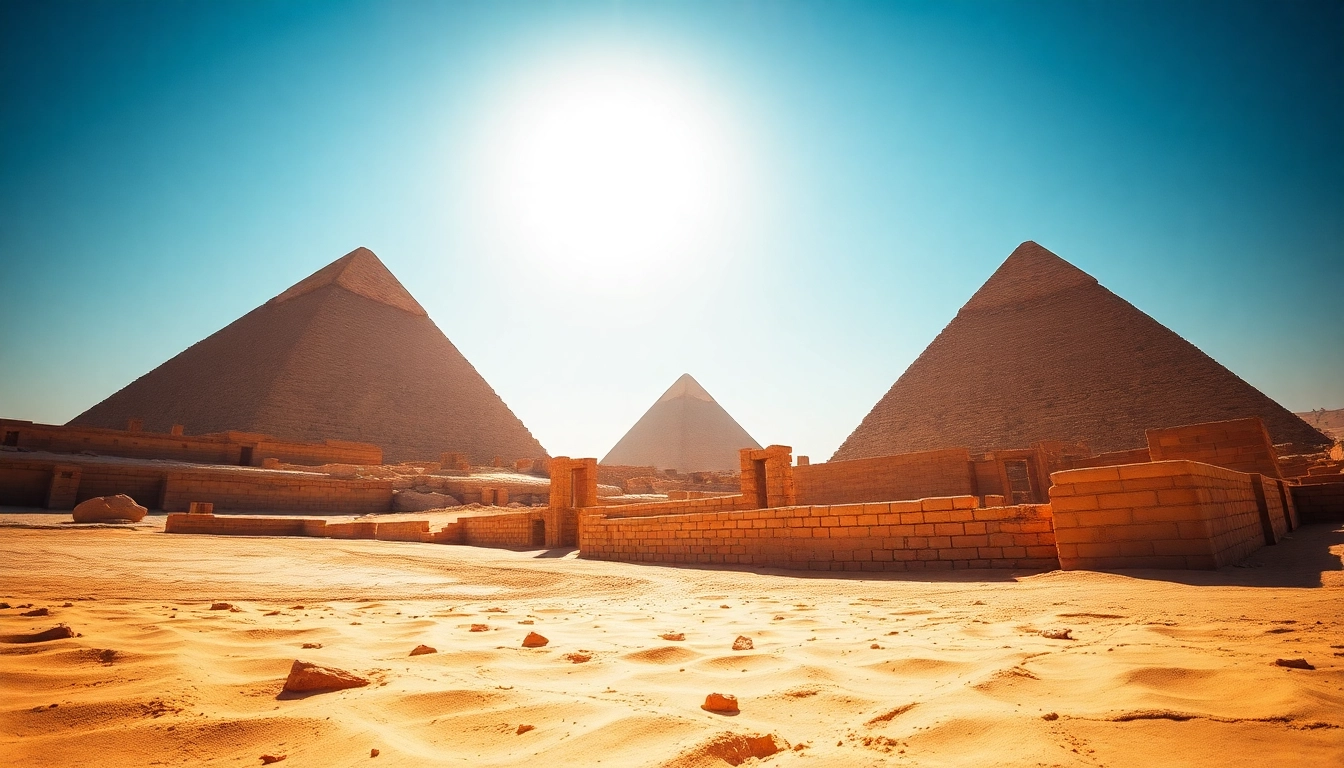
Introduction to the Great Pyramids of Giza
The Great Pyramids of Giza, a stunning emblem of ancient Egyptian civilization, continue to capture the imagination of historians, archaeologists, and tourists alike. Located on the Giza Plateau, these iconic structures stand as monumental tombs constructed for pharaohs over 4,500 years ago. The larger-than-life monuments are not merely impressive architectural feats; they are a testament to the ancient Egyptians' profound cultural and spiritual beliefs. For those seeking comprehensive insights into these historic marvels, visit https://piraminds.com/ for additional resources.
Historical Overview of the Pyramids
The history of the Great Pyramids of Giza extends back to the Fourth Dynasty of the Old Kingdom of Egypt, around 2570 BCE. The three main pyramids—Khufu, Khafre, and Menkaure—were built as grand tombs for the pharaohs who ruled during this era. The most notable of these is the Great Pyramid of Khufu, which originally stood at 146.6 meters and has served as a benchmark for architectural achievement throughout history. Initially covered in casing stones of highly polished Tura limestone, these pyramids shone brightly under the sun, symbolizing the pharaohs' divine connection and their role in the afterlife.
Architectural Features of the Pyramids
The architectural brilliance of the Great Pyramids is evident in their precise alignment and grand design. Each pyramid consists of a core structure made of large blocks of limestone, often weighing several tons. The Great Pyramid of Khufu, for instance, comprises approximately 2.3 million blocks. The layout of the pyramids includes features such as the mortuary temple connected to the main pyramid via a causeway that leads to the Nile—a pivotal aspect for conducting funeral rites.
The pyramids also incorporate shafts believed to serve a spiritual purpose. These shafts aimed toward specific celestial bodies may have been designed for the pharaoh’s soul to ascend to the afterlife, reinforcing the deeply ingrained belief in the afterlife prevalent in ancient Egyptian society.
Cultural Importance in Ancient Egypt
The cultural significance of the pyramids lies in their representation of the ancient Egyptians' religious beliefs. They were not merely tombs but a gateway to the afterlife, enshrining the bodies of pharaohs who were considered gods. Built to ensure eternal life after death, the pyramids reflect complex social structures, religious practices, and the advanced engineering skills of the Egyptians. Rituals, offerings, and intricate burial practices surrounding the pyramids showcase the blend of architecture, art, and spirituality that defined ancient Egypt.
Construction Techniques of the Pyramids
Tools and Materials Used
Understanding the construction of the Great Pyramids involves examining the tools and materials utilized by ancient Egyptians. The primary materials included limestone—local to Giza—and granite, which was transported from Aswan. Tools such as chisels, saws made of copper, and wooden sledges were used alongside simple yet ingenious techniques for moving and assembling massive stones. Recent discoveries also suggest various techniques, such as water lubrication to reduce friction during stone transportation, indicating a blend of practical experience and ingenuity.
Labor Force Behind the Construction
The construction of the pyramids required a well-organized labor force. Contrary to the popular misconception of slave labor, archaeological evidence suggests builders were likely skilled workers—farmers who worked on the pyramids during the flood season of the Nile River when agricultural work was at a halt. This labor force probably comprised thousands of individuals organized into specialized teams responsible for specific tasks, creating a system that mirrored the societal and governmental structure of ancient Egypt.
Myths and Theories on Building Methods
Various myths and theories attempt to explain how the Great Pyramids were built. Some assert that ramps were used to transport stones to higher levels, with several ramp designs proposed, including straight, zigzagging, and circular ramps. Others theorize that the stones were dragged on sledges across a wet surface to reduce friction. Although definitive evidence remains elusive, technological advances and discoveries continue to provide insights into these ancient construction methods, inspiring fascination and debate among scholars.
The Great Pyramid of Giza: A Deep Dive
Interior Layout and Chambers
The Great Pyramid of Giza features a complex interior structure. There are three main chambers: the King's Chamber, the Queen's Chamber, and a lower subterranean chamber. The design reflects a profound understanding of geometry and engineering. The King's Chamber, where the sarcophagus lies, is constructed from massive granite blocks and features a corbelled ceiling, creating a space that has inspired awe for millennia. The precise alignment of these chambers with stellar points adds a layer of astronomical significance to their design.
Mysterious Discoveries and Findings
Recent studies of the Great Pyramid have led to intriguing discoveries. Advanced imaging technologies like muon tomography have revealed hidden voids within the pyramid, suggesting that the internal design may be more intricate than previously understood. These findings have opened new avenues for research, inviting scholars to explore questions about the pyramid's construction, purpose, and the mysteries that remain undiscovered.
The Pyramid’s Influence on Architecture
The architectural innovations of the Great Pyramids have influenced countless generations and cultures. Their grandeur inspired monumental structures worldwide, from temples in ancient Mesoamerica to modern skyscrapers. The principles of engineering discovered and perfected during the construction of the pyramids continue to inform contemporary architecture and engineering practices, emphasizing the enduring legacy of these ancient marvels.
The Pyramids in Today’s Society
Modern Archaeological Studies
Modern archaeology plays a vital role in uncovering the secrets of the Great Pyramids, utilizing advanced technology and methods to conduct in-depth studies. Non-invasive technologies such as LIDAR, ground-penetrating radar, and advanced imaging techniques allow researchers to explore beneath the surface without causing damage to the historic structures. Collaborative international archaeological efforts continue to enhance our understanding of the pyramids, revealing insights about ancient Egyptian life and culture.
Tourism and Economic Impact
The Great Pyramids are among the most significant tourist attractions globally, drawing millions annually. They hold considerable economic importance to Egypt, generating revenue through tourism while providing jobs and stimulating local businesses. Efforts to enhance visitor experiences, such as guided tours, educational programs, and preservation initiatives, ensure that the pyramids remain accessible while safeguarding their integrity.
Preservation Efforts for Future Generations
The preservation of the Great Pyramids is crucial to maintaining their historical and cultural significance. Various organizations, including governmental and non-governmental entities, are actively involved in preservation efforts, employing techniques to protect against erosion, pollution, and other environmental threats. Raising awareness of the pyramids' value and implementing sustainable tourism policies are essential components of keeping these ancient wonders intact for generations to come.
Frequently Asked Questions
What are the Great Pyramids of Giza?
The Great Pyramids of Giza are monumental tombs built for pharaohs in ancient Egypt, symbolizing their power and beliefs in the afterlife.
How were the Pyramids constructed?
Although the exact methods remain debated, the pyramids likely used large labor forces, advanced engineering, and simple tools for construction.
Why are the Pyramids important?
As national treasures, the pyramids showcase ancient Egypt's architectural achievements and cultural significance in world history.
How do the Pyramids affect tourism?
Major tourist attractions, the pyramids significantly impact Egypt's economy by providing income and job opportunities for local communities.
What preservation efforts are in place?
Several organizations work on preserving the pyramids to combat natural erosion, environmental challenges, and human impact on these ancient structures.